Friday, November 30, 2012

Learning is Learning (or is it?)

 Wikimedia Commons


Many years ago I read a short story by the science fiction write Ray Bradbury. I have not, to this very day, been able to find the work. Nonetheless this piece stuck in my mind as a profound analysis of the disconnect between people as a result of technology. It described a lamenting man who while strolling through a residential area noticed that there were no people outside their homes. There were no children playing, there were no neighbors conversing over the common fences, there were no gatherings of women in the empty streets. This man could only see a faint blue light flickering from the front window of each home. As I ponder the online learning environment, I can't help but feel as the character walking the ghostly street. I feel as though the interactions between students are superficial at best. We all stare at the pale blue light of our computers which claim to assist us in being better connected. But are we? We as humans need the interaction of our peers to complete a well-rounded learning environment. They provide sources for peer review and feedback which are vital to catching things we often miss being too close to our own work. They are at arms length to be questioned or aid us in real time if need be. Here in lies my dilemma.  I hold these beliefs on one hand while simultaneously proving the opposite. Let me explain. You see I have received the best grades of all of the classes I have taken in the online environment. This is adverse to what I truly believe and yet the results speak for themselves. While technology advances we as students must embrace it or suffer a disadvantage in future endeavors. I had a difficult time this semester getting in the habit of creating a well developed blog post. I had no experience with this technology. Honestly, I had no idea exactly what a blog was. Looking back this seems silly and after the initial post was finished I felt quite accomplished. With each subsequent posting the sting was less and I found (to my surprise) that I was beginning to enjoy the process. So in closing I must say that there are pros and cons to everything and this is no exception. I look forward to the next technological advance that might in some way re-establish the significant role of interpersonal communication in the online learning environment. In the mean time I will also lament the pale blue glow.

If you would like to learn more about learning online:
http://en.wikipedia.org/wiki/E-learning

Sunday, November 18, 2012

Revision Decision

 picture courtesy of wikimedia commons

I use to be the most lazy pre-writer you have ever seen. This lead to a great deal of revision later on. Not just revision...major substantial revision. Not grammar, or punctuation but serious nuts and bolts of composition. I've learned though, (the hard way) that I was just hurting myself. I fought this advise from teachers as one step that a good writer might very well skip.......boy was I wrong. Revision might be directly related to pre-writing. I usually go about the revision process in the following ways. First I make sure to read the paper out loud and slow. something takes place when your own words are physically spoken into your own ears. This is where I usually pick up my need for commas and the like. I get a feel for the "cadence" of my prose and really ""feel the tone I've tried to impart to the piece. The next step is to enlist peer review. I used to fight this concept as well only to my own demise. You would be surprised by what gets missed when you focus so closely on your own work. The phrase "Can't see the forest for the trees." comes to mind. Just getting a fresh set of eyes on your work takes revision to a very productive level. But this can only be achieved if one can get passed the adversity to criticism. The peer you choose is not criticizing your work as an attack or with malicious intent. Quite the contrary, they are helping to improve your work and prove to be very beneficial. The re-working of our current paper has been very easy as I really focused on pre-writing on this one. Boy! what a difference. If I had known how beneficial this was to the process I would have started this much earlier. Now the only revisions I have are grammatical or involve punctuation and the like. I'm pretty happy with the composition as a whole and will keep the format very close to the outline I started with. Good Luck with your papers.
Happy Thanksgiving!
Daniel

If you would like to learn more tips on revision follow the following link:

http://writingcenter.unc.edu/handouts/revising-drafts/

Sunday, November 4, 2012

How Cohesive a Thesis!

photo courtesy of sptimes.com

The Sheriff of Hardyville, Arkansas has been called to the scene of a terrible accident. The body of a young farmhand has been found under the wheel of his still running tractor. The sheriff had never seen anything like it before although he has served this area for over thirty years. Through the sobs of the young man's young brides tears he senses that she knows more than she is saying as to the circumstances surrounding this tragedy. She is taken in for questioning where the truth finally comes out. The young man has been awake for nearly a week using crystal-meth and fell from his seat under the tractors wheel when his body couldn't take any more. The story of "Winter's Bone" written by Daniel Woodrell takes place in a town deep in the Ozarks  with many similarities to Hardyville. The grip of  methamphetamine seems to be tighter on such rural areas across the country. By choosing a rural setting for his novel "Winter's Bone" Daniel Woodrell has shed light on the social conditions existing in rural areas which promote the manufacturing and use of methamphetamines.

If you or someone you love is struggling with meth addiction and wants help clink on the link below for more information:

http://www.stopmethaddiction.com/Meth_Addiction_Help.htm

Sunday, October 28, 2012

Cooking Meth in Hell's Kitchen


http://upload.wikimedia.org/wikipedia/commons/2/2d/Crystal_Meth.jpg

In a 2002 New York Times Article entitled “Meth Building Its Hell's Kitchen in Rural America” reporter Timothy Egan describes the devastating effects of the growing meth epidemic in rural America. The reader is enlightened to the crisis through the experiences of Sheriff Rick Bart of Snohomish County in the State of Washington. The article describes the effects of this dangerous drug upon this rural area both to the individuals who use it, as well as the criminal justice system there. Mr. Egan chronicles the history of the drug's onset and educates the reader as to the reasons it has seemed to gravitate towards similar geographical areas. Sheriff Bart supplied startling statistical evidences which lent credibility to the points being made by the author. One such example is as follows, “I'd say it's getting to the point where 80 percent of all our calls are somehow related to meth.” Another statistic which enforces the idea that meth effects many persons other than the user is relayed by social worker Cammy Hart-Anderson, “Almost two-thirds of referrals to social workers in Snohomish County for domestic violence or abandoned or neglected children are related to meth...” The author also discusses the ease by which the drug is manufactured as well as the danger of the toxic ingredients involved.
This article directly relates to “Winter's Bone” as the characters in the novel were effected by the drugs use and distribution adversely just as the examples described by Sheriff Bart. One user described performing “home dentistry” while under the effects of this powerful chemical. Another drives around aimlessly while chewing her fingernails to nubs attempting to fill a shopping list of dangerous ingredients used in it's manufacture. Just as the fictitious account of child abandonment in the story, the article uses true evidences brought forth from social workers on the front lines. This article would be an excellent source for use in essay #3 as it has the credibility of both law enforcement as well as social workers who are directly impacted each and every day by this scourge.

If you would like to read the article in it's entirety: http://www.nytimes.com/2002/02/06/us/meth-building-its-hell-s-kitchen-in-rural-america.html?pagewanted=2&src=pm

works cited
 
Egan, Timothy. "Meth Building Its Hell's Kitchen in Rural America." The New York Times. The New York Times, 06 Feb. 2002. Web. 28 Oct. 2012. <http://www.nytimes.com/2002/02/06/us/meth-building-its-hell-s-kitchen-in-rural-america.html?pagewanted=2>.

Thursday, October 11, 2012

Midterm Reflections


Ms. Cline,
I feel at this point in the term I am feeling very accomplished and fulfilled having met the challenges of a very demanding course schedule. I have, for the most part, met the challenges and received complementary marks for the effort. I don’t for the life of me know why I “bury” myself by choosing such a workload and then wondering why I get burned out. I have high expectations for what I believe I can accomplish and often deny that one might possibly get behind. Things happen, such is life and yet there is grace. One thing I can say is that I am very grateful for the “no questions asked” option for one assignment. You see there was one week early on where I found myself homeless and missed a full week’s coursework in all four of my classes. None gave grace but you Ms. Cline. None gave grace.
Now on to my reflections on the readings required by this class, loved Bartleby, initially hated Modest but quite surprisingly I fell in love with it. So much so that I took time to read it through again even after the assignment was finished! Let me expound on these individually.
I was drawn to Bartleby for two reasons initially, first was my love for Melville’s most popular work: “Moby Dick” and second by my interest in the legal profession. I am studying law as well as English this year and am even considering changing my major to Law entirely. I was delighted by the idiosyncrasies of the individual characters within the story. I found myself frustrated by the main characters constant response of “I prefer not to.” Much as the narrator must have been. But my delight and even frustration were short-lived as emotions which ultimately turned to sadness at the plight of this lost soul. I believe this was a great choice as a reading for this class Ms. Cline.
Now as to “A Modest Proposal” I was surprised by this work in the end. At the first reading I fought the work at every turn. I thought, “How disgusting”. I could not have been more adverse to the reading. I never thought in a million years that I would find the value in this piece. But by setting aside my personal bias and just looking at the mechanics used by the author I found my distaste give way to a greater understanding. Thank You.
My goal for the second half of the semester is to be less dogmatic and have more of an open mind toward all literary works. I will find the value within each. I will examine the rhetorical techniques and employ them within my own writing and determine which suit my very own style. Heck, some may even find my work initially “disgusting” but redeeming in some small way. I can’t wait to see what you have in store for us Ms. Cline!

Sunday, September 30, 2012

Swift: Shock and Awe!


Response to Swift Essay
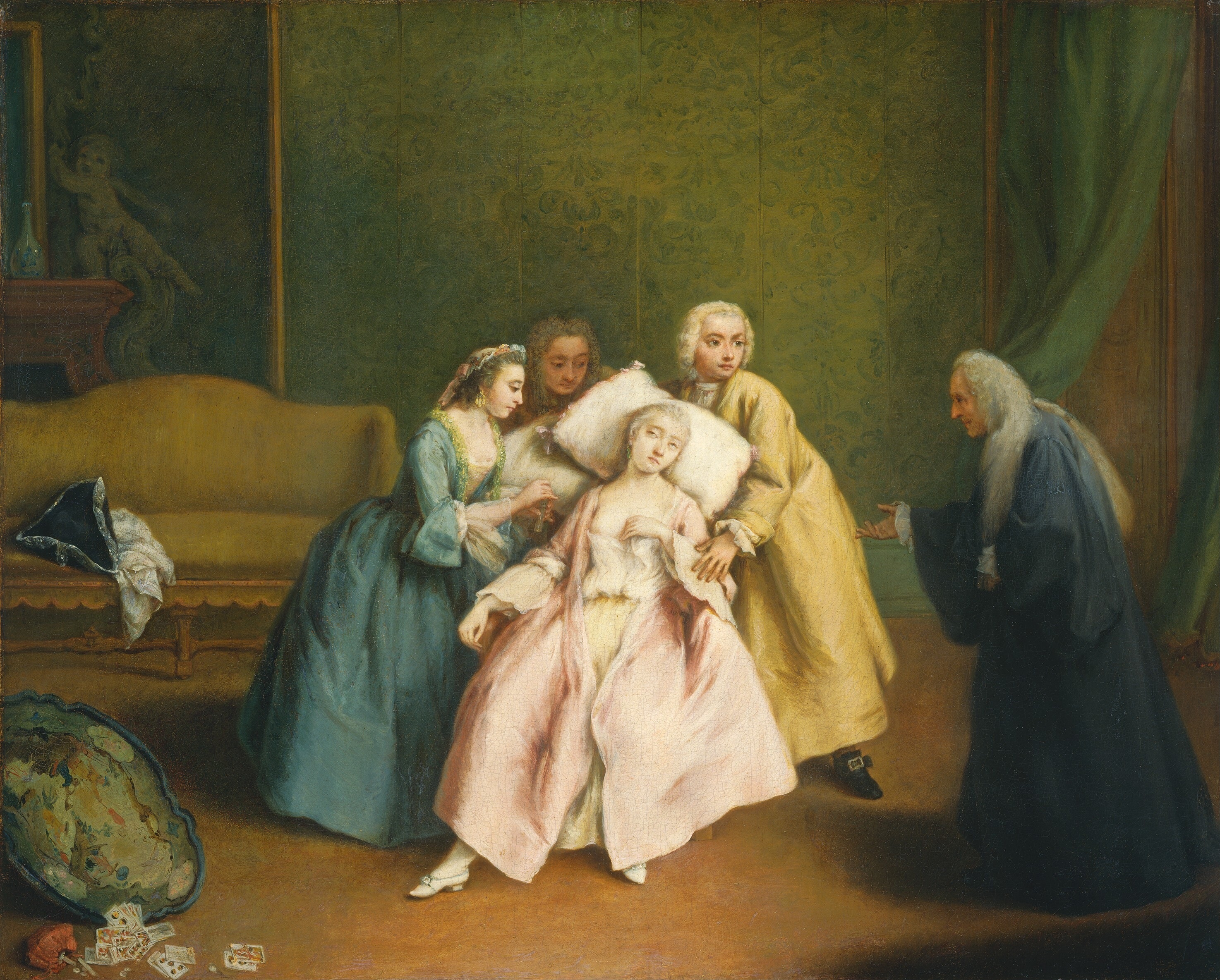
            The corner on Anglesea Street is littered with papers, books and pamphlets as the gentlewoman clutches at the stacks on her way to the cobblestones. Passers-by dive to catch her and prevent her from injury or at the very least from soiling her fine clothing with Dublin’s filth. They are un-aware of the cause of her fainting, yet it is still clutched within her silk-gloved hand.  A literary work so heinous and disgusting that it has brought about similar responses everywhere it’s read. This work, published under a pseudonym, proposes the sale of the emerald isle’s impoverished children for the purpose of cannibalism. This was to address the overpopulation of the poor Irish people and to benefit the general society as a whole. Through his 1729 satirical essay “A Modest Proposal” Jonathan Swift is quite effective in his attempt to prompt his contemporaries to re-assess their opinions on many social conditions.  Can we surmise that the mere shock of the public at large was the intended purpose of this work?
            The answer would be both yes and no. Initially any reader of the text would be drawn in by being made aware of the current plight of those less fortunate. Swift is clever in this tactic by delaying his shocking solution by a few paragraphs of seemingly harmless prose. He addresses his audience from the authority of his pseudonym of which he claims to be a doctor. Many similar writings of that period began in the same tone and addressed the exact same issues but none in the way in which Swift crafted.  By this I believe we can assume the authors of such text were among his intended audiences. He may very well have aimed at shaming them as well as their solutions as inadequate or maybe condescending toward the peoples they intended to aid, the Irish. His audience included the English themselves as well as Irish society as he lived in both and was very familiar with the predatory relationship which existed between the two cultures. What social conditions existed in that period which pleaded for such a harsh rebuke by Swift?
            England was notoriously oppressing the Irish peoples in many ways at this time.  Swift addressed them personally when he wrote, "For this kind of commodity will not bear exportation, and flesh being of too tender a consistence, to admit a long continuance in salt, although perhaps I could name a country, which would be glad to eat up our whole nation without it." Also the economic conditions within Ireland did perpetuate a cycle of poverty that he was personally witness to. One only had to walk the same streets he did to be acutely made aware of their plight. There existed the stereotype of the Irish poor as thieves which he alludes to by twice mentioning the sentiment within the text. There existed a predatory relationship between landlords of the time and their victims; the tenants. A close reading and attention to subtleties within the pamphlet give light to the religious disparities between Catholic Ireland and Protestant England just as the news of today does: some things never change. Can we therefore surmise that Swift was effective at addressing his audience(s) whatever their position within these social contexts?
            From the woman of wealth fainted on Anglesea Road, to the Landlords who preyed upon their tenants, from the English policymakers who were much to blame, from the clergy of both sides to the condescending authors of segmented “solutions”  who missed their marks; Swift by choosing such a tone in his prose met his. He got the attention of all humanity in that region, regardless of class, in a profound way which caused quite a stir, thus more conversation on the problems but I think ultimately towards solutions and remedies. Consider the fact that we are here almost three hundred years later talking about his tactics, aims and success.  Can we identify any of the common rhetorical tools in the Essay by Mr. Swift?
            Of course we can! Being well trained in these classical appeals, the author employs many of the agents of Aristotle toward his aim. By relying on the false credibility of a fictitious doctor right on the front cover of the pamphlet the author has employed the common rhetorical tool of ethos. He has taken on the “cloak” of credibility by deceiving his audience into think that he is qualified to speak on such matters. The most obvious appeal in the text is the emotional one, or in other words; pathos. We feel our emotions range from sympathy for the impoverished, to horror at the proposed solution; to anger at the arrogance of the narrator. All examples of the author’s intended use of the common rhetorical tool pathos.  Beyond rhetorical devices are there other literary methods at work here?
            Yes, satire, More precisely Juvenalian satire. Abrasive and contemptuous in nature, this method juxtaposes the decency or sense of right order against the alternative producing what I think is a more effective shock to the reader, Swift does not wish for a passive audience. He desires action as a result of his work. He proposes an absurd and outright morbid solution to the problems to propel the reader to ask him/herself what might be a viable one and then hopefully act in some productive way.
            From Anglesea Road 1729 to Downing Street London, from Broadway in the USA and even in this day and age: the use of satire to engage one’s audience can be a very effective literary method. Jonathan Swift did everything right, and in such a profound way that we are discussing and learning from his writings today three hundred years later. He affected his audience by causing their collective jaws to drop aghast………just ask the woman down on Anglesea Road…….that is, when she regains consciousness.
photo: wikimedia commons
Response to Swift Essay
            The corner on Anglesea Street is littered with papers, books and pamphlets as the gentlewoman clutches at the stacks on her way to the cobblestones. Passers-by dive to catch her and prevent her from injury or at the very least from soiling her fine clothing with Dublin’s filth. They are un-aware of the cause of her fainting, yet it is still clutched within her silk-gloved hand.  A literary work so heinous and disgusting that it has brought about similar responses everywhere it’s read. This work, published under a pseudonym, proposes the sale of the emerald isle’s impoverished children for the purpose of cannibalism. This was to address the overpopulation of the poor Irish people and to benefit the general society as a whole. Through his 1729 satirical essay “A Modest Proposal” Jonathan Swift is quite effective in his attempt to prompt his contemporaries to re-assess their opinions on many social conditions.  Can we surmise that the mere shock of the public at large was the intended purpose of this work?
            The answer would be both yes and no. Initially any reader of the text would be drawn in by being made aware of the current plight of those less fortunate. Swift is clever in this tactic by delaying his shocking solution by a few paragraphs of seemingly harmless prose. He addresses his audience from the authority of his pseudonym of which he claims to be a doctor. Many similar writings of that period began in the same tone and addressed the exact same issues but none in the way in which Swift crafted.  By this I believe we can assume the authors of such text were among his intended audiences. He may very well have aimed at shaming them as well as their solutions as inadequate or maybe condescending toward the peoples they intended to aid, the Irish. His audience included the English themselves as well as Irish society as he lived in both and was very familiar with the predatory relationship which existed between the two cultures. What social conditions existed in that period which pleaded for such a harsh rebuke by Swift?
            England was notoriously oppressing the Irish peoples in many ways at this time.  Swift addressed them personally when he wrote, "For this kind of commodity will not bear exportation, and flesh being of too tender a consistence, to admit a long continuance in salt, although perhaps I could name a country, which would be glad to eat up our whole nation without it." Also the economic conditions within Ireland did perpetuate a cycle of poverty that he was personally witness to. One only had to walk the same streets he did to be acutely made aware of their plight. There existed the stereotype of the Irish poor as thieves which he alludes to by twice mentioning the sentiment within the text. There existed a predatory relationship between landlords of the time and their victims; the tenants. A close reading and attention to subtleties within the pamphlet give light to the religious disparities between Catholic Ireland and Protestant England just as the news of today does: some things never change. Can we therefore surmise that Swift was effective at addressing his audience(s) whatever their position within these social contexts?
            From the woman of wealth fainted on Anglesea Road, to the Landlords who preyed upon their tenants, from the English policymakers who were much to blame, from the clergy of both sides to the condescending authors of segmented “solutions”  who missed their marks; Swift by choosing such a tone in his prose met his. He got the attention of all humanity in that region, regardless of class, in a profound way which caused quite a stir, thus more conversation on the problems but I think ultimately towards solutions and remedies. Consider the fact that we are here almost three hundred years later talking about his tactics, aims and success.  Can we identify any of the common rhetorical tools in the Essay by Mr. Swift?
            Of course we can! Being well trained in these classical appeals, the author employs many of the agents of Aristotle toward his aim. By relying on the false credibility of a fictitious doctor right on the front cover of the pamphlet the author has employed the common rhetorical tool of ethos. He has taken on the “cloak” of credibility by deceiving his audience into think that he is qualified to speak on such matters. The most obvious appeal in the text is the emotional one, or in other words; pathos. We feel our emotions range from sympathy for the impoverished, to horror at the proposed solution; to anger at the arrogance of the narrator. All examples of the author’s intended use of the common rhetorical tool pathos.  Beyond rhetorical devices are there other literary methods at work here?
            Yes, satire, More precisely Juvenalian satire. Abrasive and contemptuous in nature, this method juxtaposes the decency or sense of right order against the alternative producing what I think is a more effective shock to the reader, Swift does not wish for a passive audience. He desires action as a result of his work. He proposes an absurd and outright morbid solution to the problems to propel the reader to ask him/herself what might be a viable one and then hopefully act in some productive way.
            From Anglesea Road 1729 to Downing Street London, from Broadway in the USA and even in this day and age: the use of satire to engage one’s audience can be a very effective literary method. Jonathan Swift did everything right, and in such a profound way that we are discussing and learning from his writings today three hundred years later. He affected his audience by causing their collective jaws to drop aghast………just ask the woman down on Anglesea Road…….that is, when she regains consciousness.